
Views: 0 Author: Site Editor Publish Time: 2025-10-14 Origin: Site


Ever wonder what keeps hospital rooms and air purifiers so clean? It’s often thanks to a small but powerful device — the HEPA filter. These filters capture up to 99.97% of microscopic particles, including dust, pollen, and bacteria. They quietly protect your air every single day. In this post, you’ll learn how HEPA filters work, what they remove, and how to choose the right one for your home or business.
A HEPA filter stands for High Efficiency Particulate Air filter. It’s not just another air filter — it’s a precision tool for clean air.
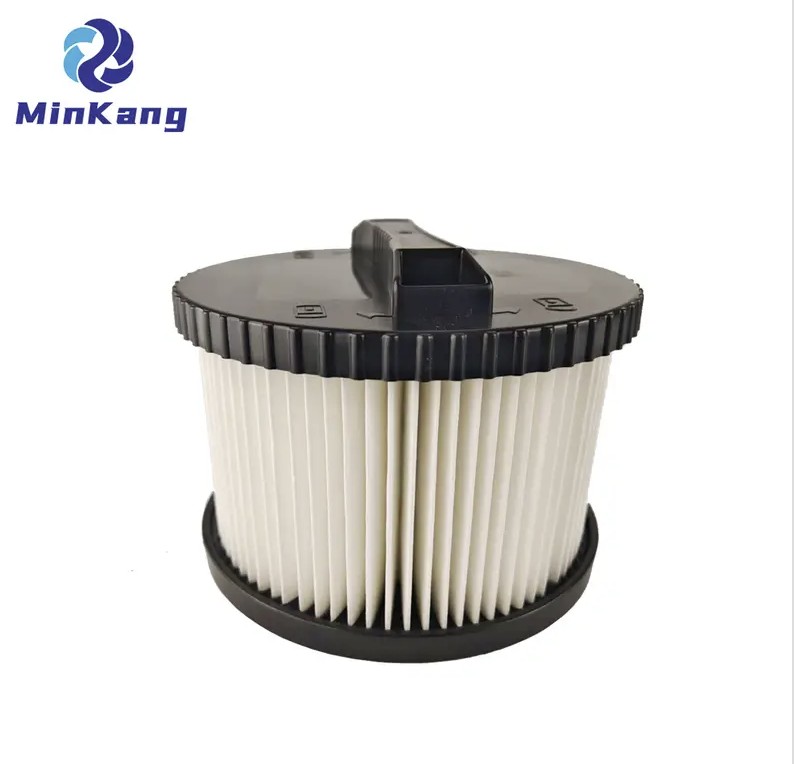
HEPA filters were first developed during World War II. Scientists working on the Manhattan Project needed a way to capture radioactive dust. That research led to the first HEPA-style filters — a breakthrough in air safety. By the 1980s, HEPA became an official global standard for clean air systems.
Nowadays, HEPA filters are designed to trap at least 99.97% of particles as small as 0.3 microns. That number might sound random, but it’s actually crucial. Particles around 0.3 µm are known as the most penetrating particle size — the hardest ones to catch. If a HEPA filter can stop these, it can handle anything larger or smaller even better.
HEPA filters are made from fine fibers that form a dense, random web.
Common materials include:
Glass fiber – the most traditional and efficient option.
Borosilicate glass is drawn into sub-micron strands (0.2–2 µm), then thermally bonded with an acrylic or urea-formaldehyde resin.
PTFE (Teflon) – durable, chemical-resistant, and used in high-end models.
A 0.1 µm PTFE membrane is stretched into a node-and-fibril structure that is 97 % air by volume. Because filtration is achieved on the surface rather than deep inside the media, pressure drop starts 30–50 % lower than glass.
Polypropylene or polyester fibers – lighter, flexible, and often used in household filters.
Polymer pellets are extruded through a die and attenuated by hot high-velocity air, producing fibers 1–5 µm thick. Layers of varying charge density are then electrostatically charged (“electret” treatment) so that the filter grabs particles via both mechanical and electrostatic attraction.
Each material affects airflow and efficiency slightly differently, but all share one goal: to keep microscopic particles out of the air you breathe.
HEPA filters may look simple, but inside, they’re small air-cleaning machines. They don’t use chemicals or magnets — just physics, air movement, and clever design.
A HEPA filter uses pleated mechanical air filtration. Picture layers of folded paper-like fibers, stacked tightly together. The pleats increase surface area, so more air can pass while trapping more dust. Air flows through a maze of microscopic fibers arranged randomly. These fibers create a dense, deep network that catches particles from every direction.
HEPA filtration is not a single “screen door” that blocks contaminants; it is a four-stage obstacle course in which every twist, bounce, and static tug is calculated. Each mechanism dominates a specific particle-size window, so the web of fibers can remove everything from visible pollen to viruses a thousand times smaller than the period at the end of this sentence.
Impaction – the head-on collision
Large, heavy particles (roughly 1–10 µm) such as dust mites, pollen grains, and mold spores have too much momentum to follow the airstream as it bends around a fiber. Instead they fly straight, slam into the fiber surface, and stick like bugs on a windshield. Impaction is the first line of defense and explains why the upstream face of a HEPA pleat often looks dusty within days.
Interception – the close brush
Mid-size particles (0.3–1 µm)—think smoke droplets, skin flakes, and most bacteria—are light enough to stay in the airflow but still large enough to graze a fiber if they pass within one particle radius of it. When they touch, van der Waals forces grab them and hold them fast. Interception is the reason the “most penetrating particle size” sits at 0.3 µm: particles this size dodge impaction yet are still too small for interception to be 100 % effective, so the filter’s rating is pegged here.
Diffusion – the random walk
Anything smaller than 0.3 µm—viruses, combustion nanoparticles, fragments of tire wear—gets bounced around by Brownian motion. Like a drunk staggering through a crowded bar, the particle zig-zags until it collides with a fiber. The smaller the particle, the wilder the walk, so diffusion actually rises in efficiency as diameter shrinks below 0.1 µm. This counter-intuitive trick is why HEPA filters capture ultrafine dust even better than coarse dust.
Electrostatic attraction – the invisible handshake
Many HEPA media—especially melt-blown polypropylene—carry a permanent electret charge. Charged particles (say, soot fragments or dried detergent residue) feel a Coulomb force and are pulled sideways onto a fiber even when the airflow would carry them past. The bonus capture can lift overall efficiency by 5–15 % without adding any physical thickness, which is how “green” pleated filters manage low pressure drop and high capacity at the same time.
Working in concert, these four mechanisms create a continuous capture curve: impaction for the big, interception for the midsize, diffusion for the tiny, and electrostatics for anything that carries a charge. The result is the 99.97 % efficiency at 0.3 µm that defines true HEPA performance—and the fresh, lung-friendly air that follows.
| Mechanism | How It Works | Targets |
|---|---|---|
| 1. Impaction | Large particles move fast, collide with fibers, and stick. | Dust, pollen, mold spores |
| 2. Interception | Medium particles follow airflow and brush against fibers, getting caught. | Smoke, bacteria |
| 3. Diffusion | Tiny particles bounce randomly (Brownian motion) and hit fibers by chance. | Viruses, ultrafine dust |
| 4. Electrostatic Attraction | Some fibers hold a weak static charge that pulls in charged particles. | Fine charged pollutants |
Each step handles different particle sizes, making the system effective across a wide range. Together, they turn polluted air into something fresh and breathable.
You can’t always see what’s floating in the air — but your lungs can feel it. A HEPA filter targets the invisible stuff that ordinary filters miss.
HEPA filters are experts at trapping tiny airborne particles, even ones too small for the human eye.
They remove:
Dust and pollen that trigger sneezing and allergies.
Pet dander from cats and dogs — those clingy microscopic flakes.
Smoke particles, whether from cigarettes, cooking, or wildfires.
Mold spores and bacteria that can circulate in damp or crowded areas.
To understand how powerful HEPA filters are, look at particulate matter (PM) — the fine particles found in air pollution.
| Particle Type | Approximate Size (µm) | Typical Sources | HEPA Capture Efficiency |
|---|---|---|---|
| PM10 | 10 microns | Dust, pollen, mold | Nearly 100% |
| PM2.5 | 2.5 microns | Smoke, combustion, bacteria | ≥99.97% |
| PM0.3 | 0.3 microns (most penetrating size) | Ultrafine pollutants, aerosols | ≥99.97% or higher |
Even smaller particles — like viruses around 0.1 microns — get trapped through diffusion, as shown by NASA research. So while you might not see the pollution, the filter catches it all day long.
Cleaner air isn’t just about comfort — it’s about health.
A HEPA filter helps people breathe easier, especially those sensitive to airborne irritants.
Reduces allergy and asthma triggers: It cuts pollen, dust, and pet allergens that inflame the airways.
Limits airborne germs: By trapping bacteria and droplet-sized contaminants, it lowers the spread of illness.
Protects sensitive environments: Hospitals, laboratories, and cleanrooms rely on HEPA filters for sterile air.
At home or at work, these filters quietly remove the particles that cause coughing, sneezing, and fatigue — leaving the air fresher, lighter, and safer to breathe.
HEPA filters aren’t just for labs or hospitals anymore. They quietly protect people everywhere — from living rooms to jet cabins.
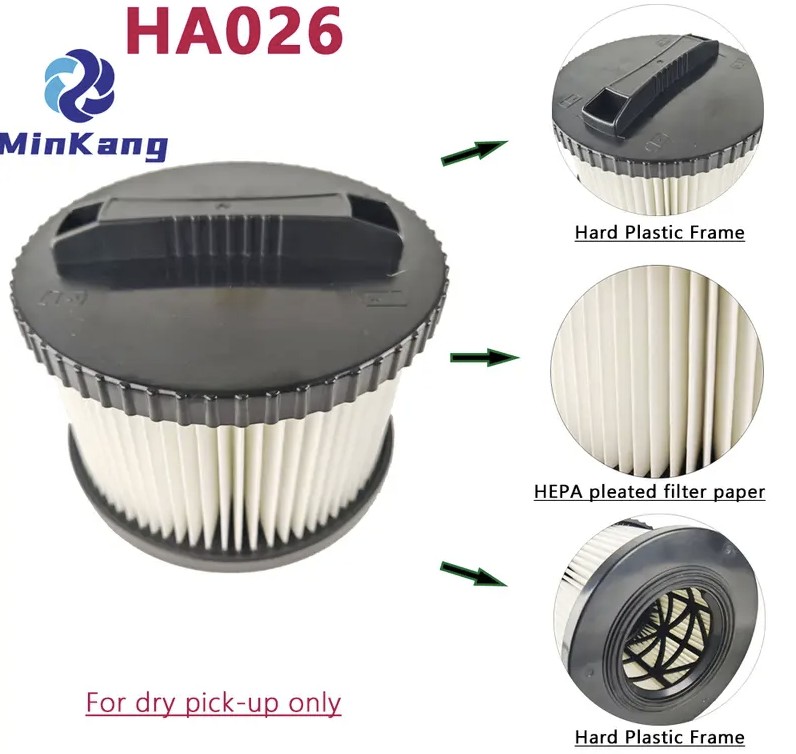
At home, HEPA filters are your invisible cleaners. They live inside air purifiers, vacuum cleaners, and HVAC systems. Each one captures allergens, smoke, and pet hair before it ever reaches your lungs. A good purifier can recycle the air in a small room several times per hour. That’s why people with allergies or pets swear by them.
| Home Device | Main Function | HEPA Filter Role |
|---|---|---|
| Air Purifier | Cleans indoor air | Traps dust, pollen, smoke |
| Vacuum Cleaner | Removes dirt from surfaces | Stops fine dust from escaping |
| HVAC System | Cools or heats air | Improves indoor air quality year-round |
Hospitals depend on HEPA filters for sterile environments. In operating rooms, every breath matters — HEPA keeps airborne bacteria out. Cleanrooms use them to stop contamination during delicate procedures or testing. They even appear in isolation wards to prevent disease spread. Each filter helps create a protective “air curtain” around patients and staff.
In factories and research labs, HEPA filters are part of the safety system. They protect both workers and products from microscopic dust or fumes. Industries like pharmaceuticals, electronics, and aerospace rely on them.
For example:
In drug manufacturing, they block powder contamination.
In electronics, they stop static or dust from damaging chips.
In aerospace, they ensure equipment assembly stays particle-free.
You’ll even find HEPA filters high above the clouds. Aircraft cabins use them to remove viruses and odors while maintaining cabin pressure. Laminar flow hoods in laboratories use HEPA-filtered air that flows in one direction — a protective barrier against contamination. They create “clean zones” where even a single dust speck can’t survive. Across homes, hospitals, and industries, HEPA filters quietly handle the dirty work — keeping the air safe, pure, and breathable.
HEPA filters don’t absorb gases, odors, or chemical vapors.
That means things like:
Volatile Organic Compounds (VOCs) from paint, cleaners, or glue.
Cooking odors or tobacco smells.
Ozone and chemical fumes from industrial or city air.
These molecules are far smaller than solid particles — too tiny for the fibrous HEPA structure to trap. They simply pass through, invisible but still active in the air.
| Pollutant Type | Example Source | HEPA Effectiveness |
|---|---|---|
| Dust, pollen, mold | Homes, outdoors | Excellent (≥99.97%) |
| VOCs, fumes | Paint, smoke, cleaners | Poor |
| Odors | Pets, cooking, tobacco | Limited |
| Gases | Carbon monoxide, ozone | None |
That’s why many modern air purifiers combine HEPA filters with other technologies. An activated carbon filter can trap gases and odors that HEPA misses. Carbon’s porous surface absorbs molecules, neutralizing smells and chemicals. Some systems also use UV-C light to kill microorganisms stuck on the HEPA surface. When combined, these layers create a full-spectrum air-cleaning system — one handles particles, the other tackles odors and germs.
A: HEPA stands for High Efficiency Particulate Air. It refers to a mechanical air filter that removes at least 99.97% of airborne particles as small as 0.3 microns, including dust, pollen, and bacteria.
A: Yes. HEPA filters capture bacteria and many viruses attached to droplets or dust particles. Research by NASA and the EPA shows that HEPA filters are even more efficient at trapping particles smaller than 0.3 microns, such as viruses.
A: They work the same way — both trap fine airborne particles — but serve different systems. A HEPA vacuum filter prevents dust from re-entering the air, while a HEPA air purifier filter continuously cleans the surrounding room air.
A: It depends on the type. True HEPA filters are usually non-washable and should be replaced when dirty. Washing can damage the fibers and reduce efficiency. Only labeled “washable” or “permanent” HEPA filters should be rinsed carefully and air-dried.
A: MERV (1–16) measures general filter performance, while HEPA (MERV 17–20) represents ultra-high efficiency. HEPA filters capture smaller particles — down to 0.3 µm — with much higher precision than standard HVAC filters.
A: Absolutely. HEPA filters remove pollen, pet dander, and dust mites that trigger allergic or asthmatic reactions. Cleaner indoor air reduces sneezing, wheezing, and congestion, making them ideal for sensitive individuals.
A: Most HEPA filters last 6–12 months, depending on usage, environment, and air quality. Homes with pets or smoke may require more frequent replacement to maintain optimal performance and airflow.
From hospitals to homes, HEPA filters have become the gold standard for clean, breathable air. They trap the particles your eyes can’t see — dust, pollen, bacteria, and even viruses — creating a safer, healthier environment for everyone. By understanding how they work and what they can (and can’t) remove, you can choose the right filter for your needs and maintain it properly for lasting performance.
If you’re ready to experience cleaner, purer air, explore our full range of certified HEPA filters at Minkang Filter.
Visit www.minkangfilter.com to discover advanced air filtration solutions built for homes, hospitals, and industries worldwide — because clean air shouldn’t be optional.


